









Jeremy Popelka: Archaeology and Archetypal Images in Sand Cast and Blown Glass
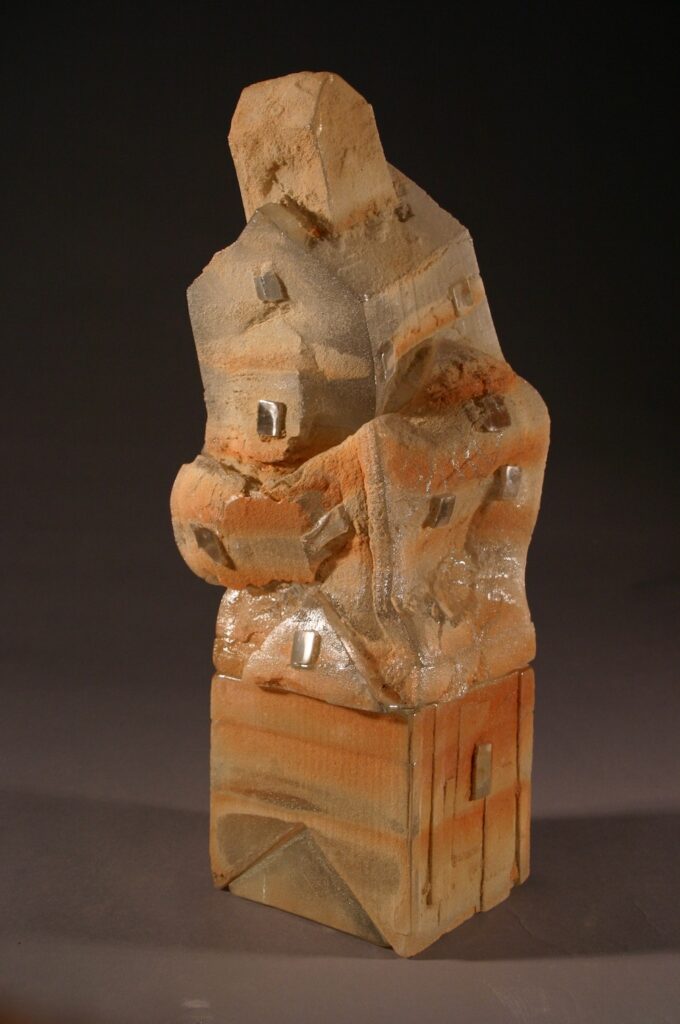
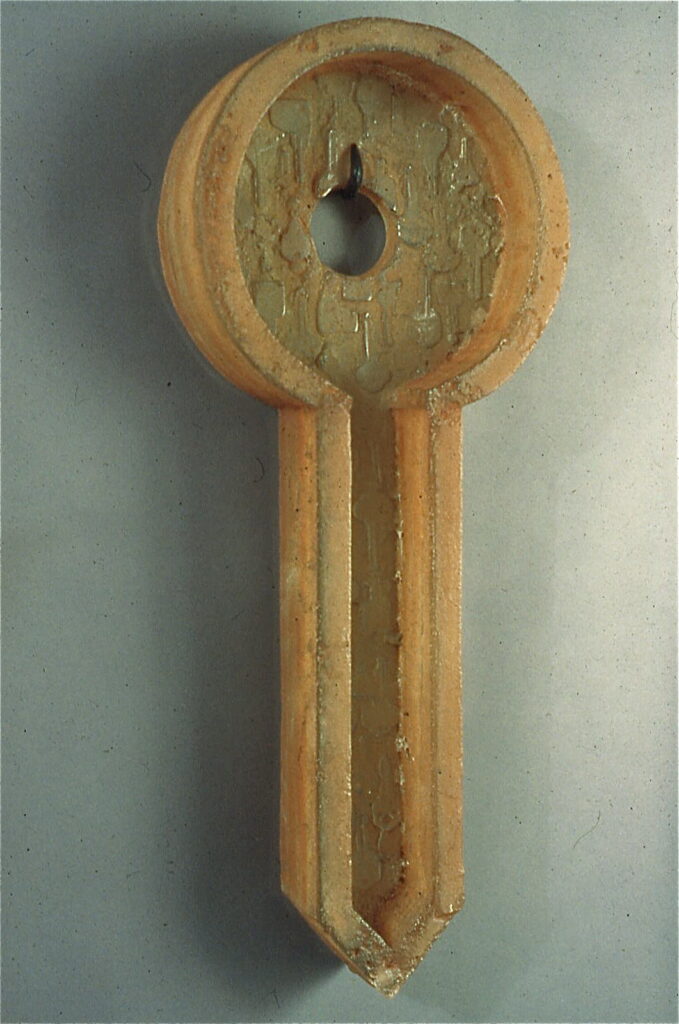
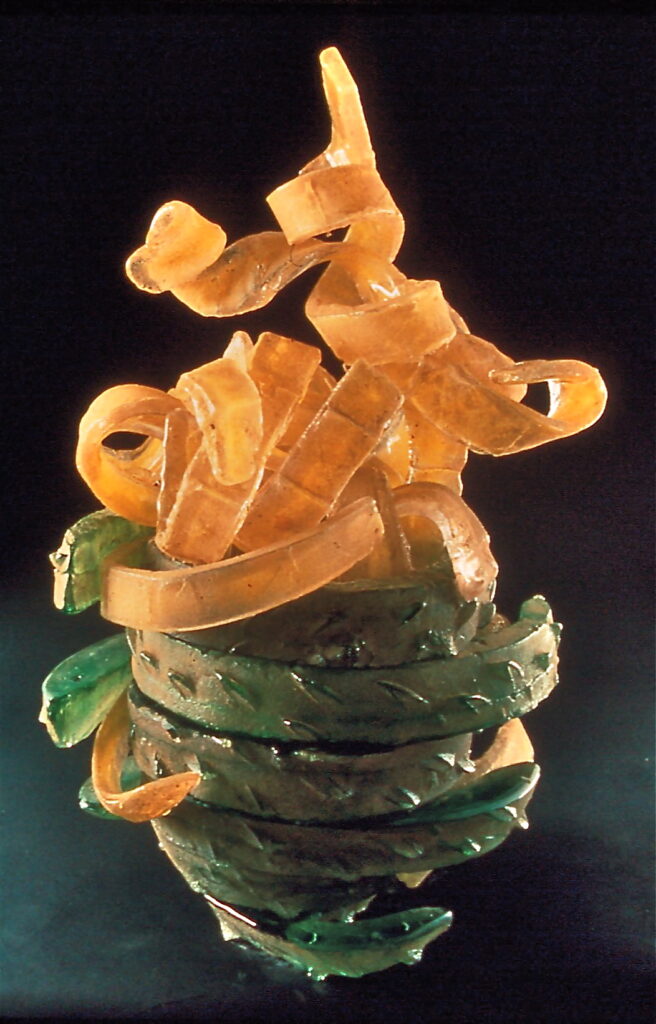
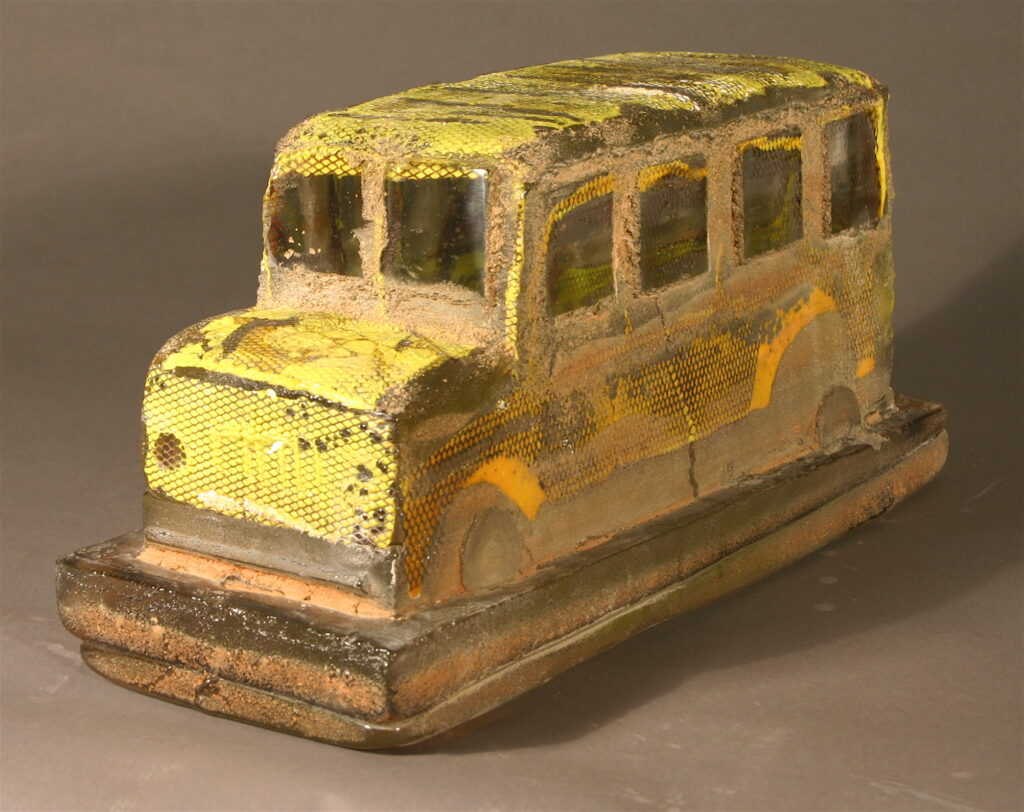
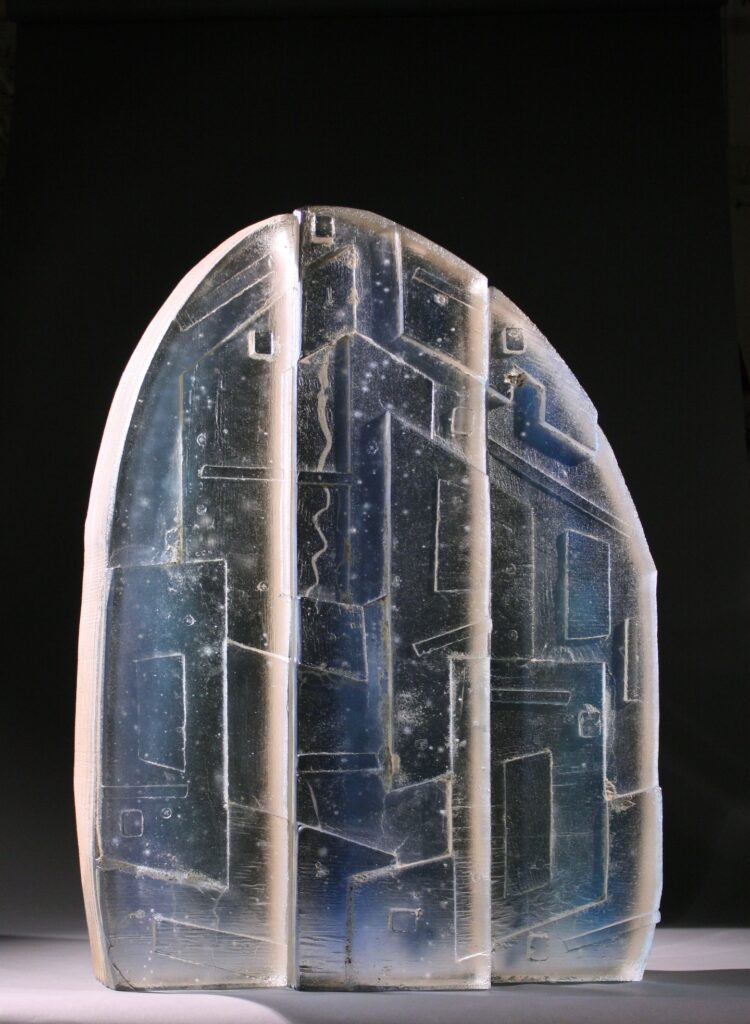
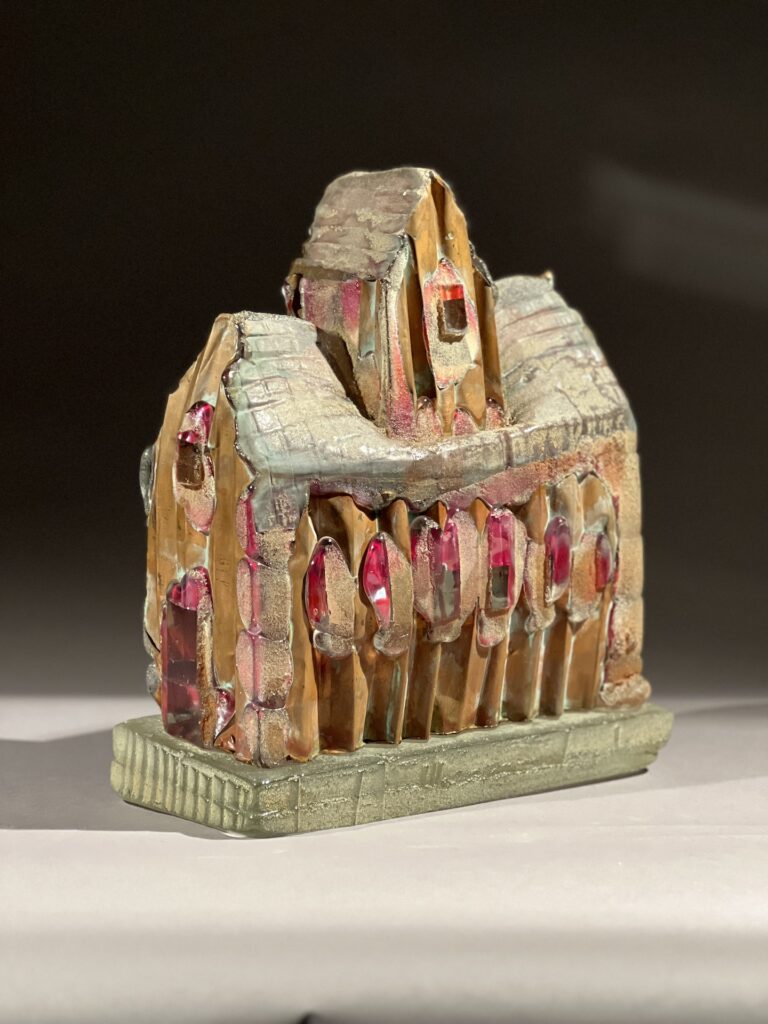
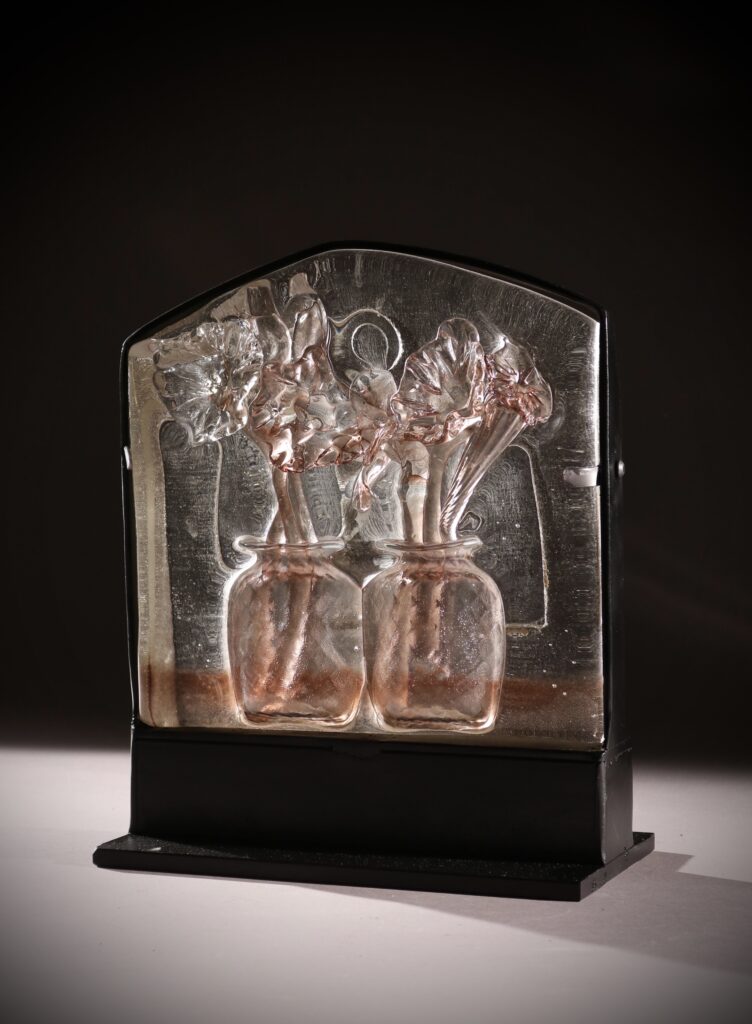
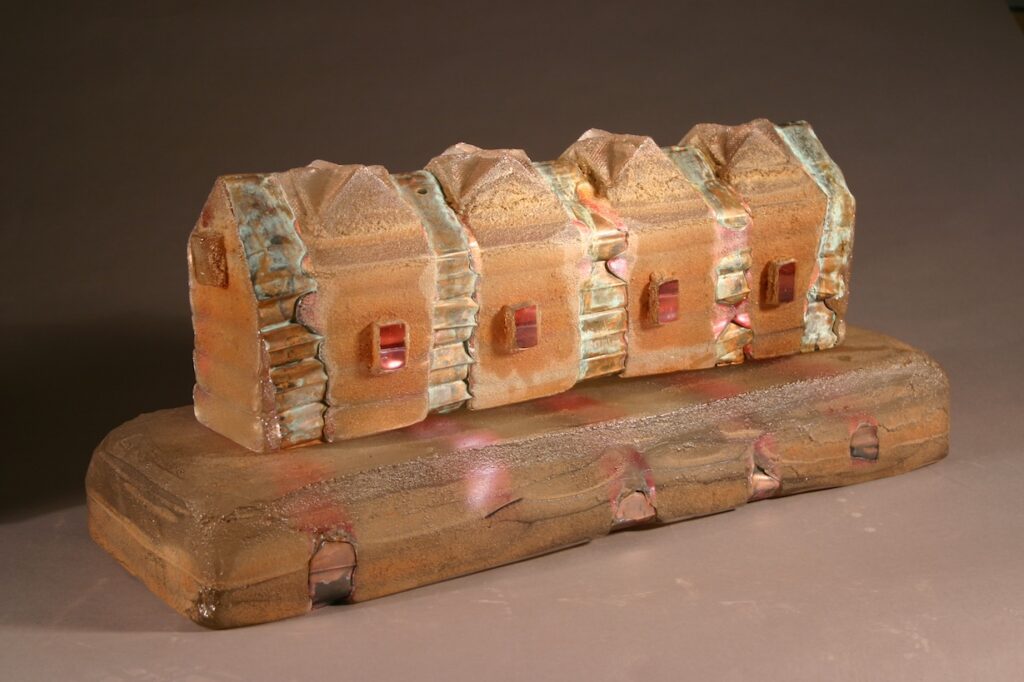
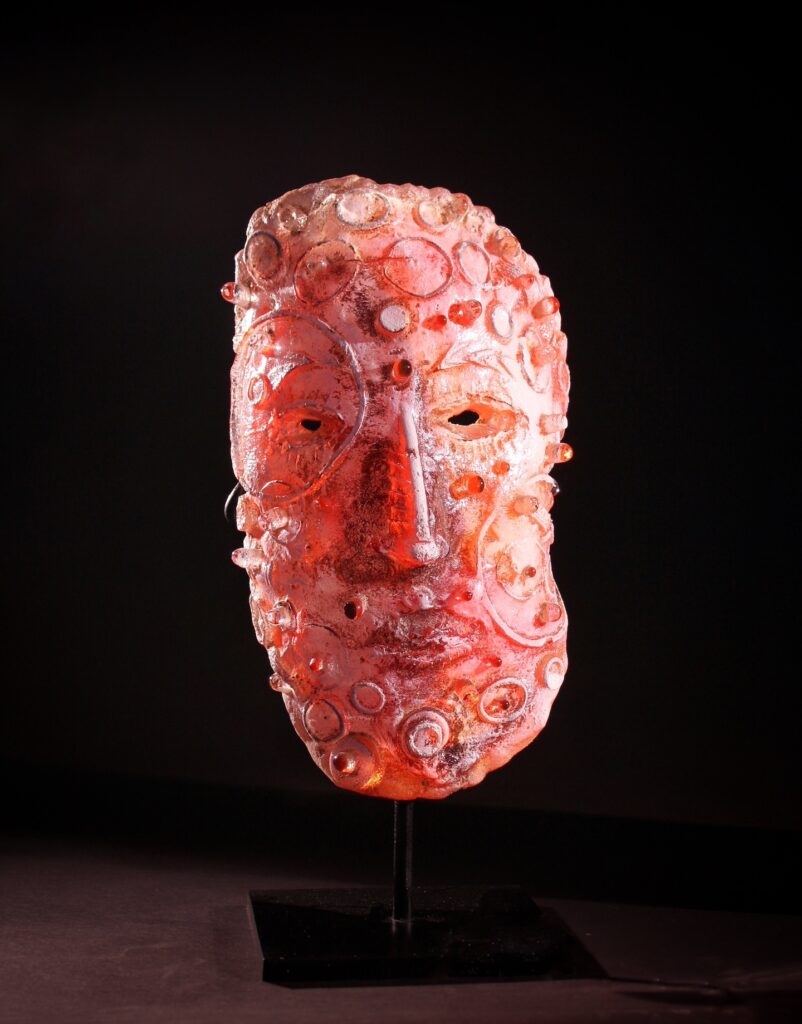
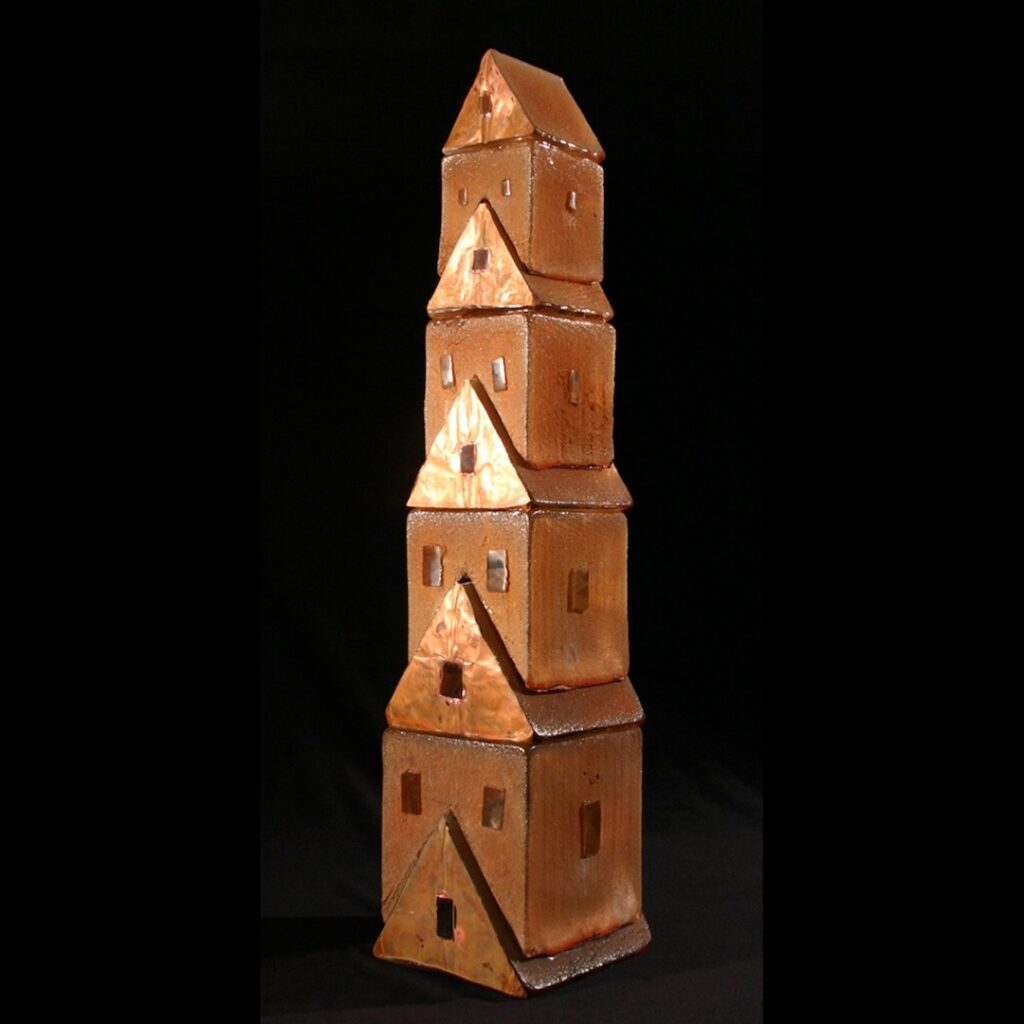
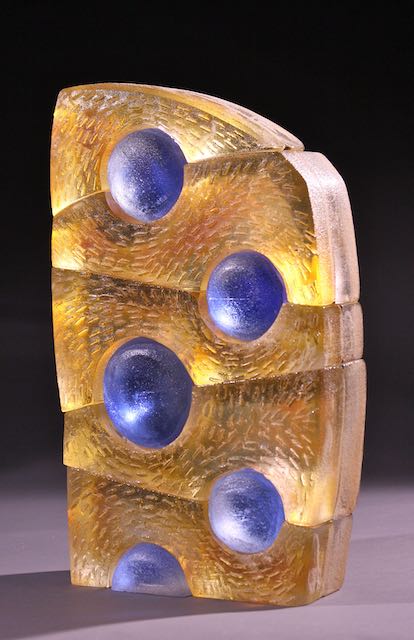
Jeremy Popelka has focused much of his career on sand casting and blown glass sculptural work. Drawing both from nature and historical artifacts, his work reflects a deep interest in how a personal interpretation of a form can embody larger issues of intent, symbolic meaning, and innate understanding. Working from renderings, wood models, and molds, he creates components of cast glass that are often assembled into larger forms. The textures and surfaces associated with sand casting glass offer a perfect vehicle to bond the sculptural forms with luminous qualities of the material. The interesting duality between an opaque-scared surface with a transparent heart sets up a perfect tension that symbolizes one’s very being.
Says Popelka: “The cast work sculptures are part of a continuing series that is driven by my interest in archaeology and archetype images. I am intrigued with our oral traditions and how they may be expressed through form.”
Popelka has been working with glass for more than 30 years and calls Sturgeon Bay, Wisconsin, home. The artist has navigated his education in glass at the instruction of luminaries including Dale Chihuly, Bertil Vallien, Erwin Eisch, Joel Philip Myers, Marvin Lipofsky, and Clifford Rainey. Establishing his sand cast glass sculptures in California in 1990 after receiving his MFA at the California College of the Arts, he went on to exhibit in many galleries and museums including The Hokkaido World Glass Now and the Kanazawa Glass Exposition. His work is included in many private and public collections including the Museum of Wisconsin Art. He and business partner/ studio mate Stephanie Trenchard have conducted workshops around the country, including at the world-renowned Pilchuck Glass School and the Corning Museum of Glass.
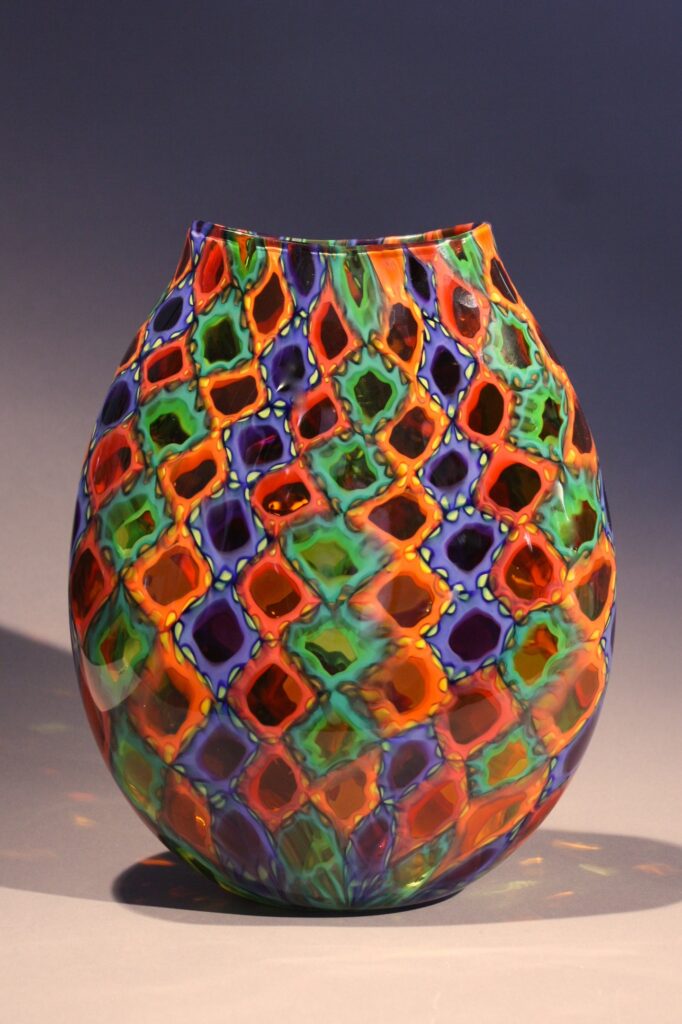
Along with his sand cast work, Popelka creates hand blown glass vessels in the Murrini technique. The process, which involves layering molten glass colors on a steel rod and then stretching it into a long cane, is often characterized as a classic Italian concept from Murano glass history. Its origins however predate this by thousands of years with examples common in Egyptian and other ancient Middle Eastern cultures. The challenging nature of the technique involves geometric glass elements combined into a larger fused matrix that is blown into a larger organic vessel form. Popelka gets much of his inspiration from nature by looking at images of cellular structures and other patterns and colors that occur organically.
Says Poeplka: “Historical observations, such as imagery derived from traditional rug making societies, also play a direct part in my thought process. My recent work involves more detailed sections as well as the use of symbols in the glass elements that are referential to imagery found in indigenous peoples’ artworks made from traditional media. Recognizing patterns in color, form, and intent, whether it occurs naturally or is manmade, is the foundation for this work.”
In January 2017, Popelka and Trenchard arranged for the construction of glassblowing equipment and began a seven-week residency program for students in Thailand, where their main objectives were to educate a handful of Thai college students on how to work with hot glass and to maintain the furnace and other equipment. The students were associated with the Silpakorn University art school in Bangkok, which has a curriculum very similar to top art schools around the world. Three of the original eight students were hired to operate the studio, called the BGC Glass Studio.
After eight years, the studio has brought in other glassblowers to help train and work with the resident artists, who have traveled internationally to attend art glass workshops and conduct numerous art exhibits around Thailand. This facility and the talented artists involved have forever altered the glass art landscape in Southeast Asia.
Says Popelka: “Being immersed in another culture, working and striving with others to create something meaningful, gave me a completely different perspective on life.”
Many thanks to our sponsors! Click on sponsor logos for more info.


